
Why this matters now
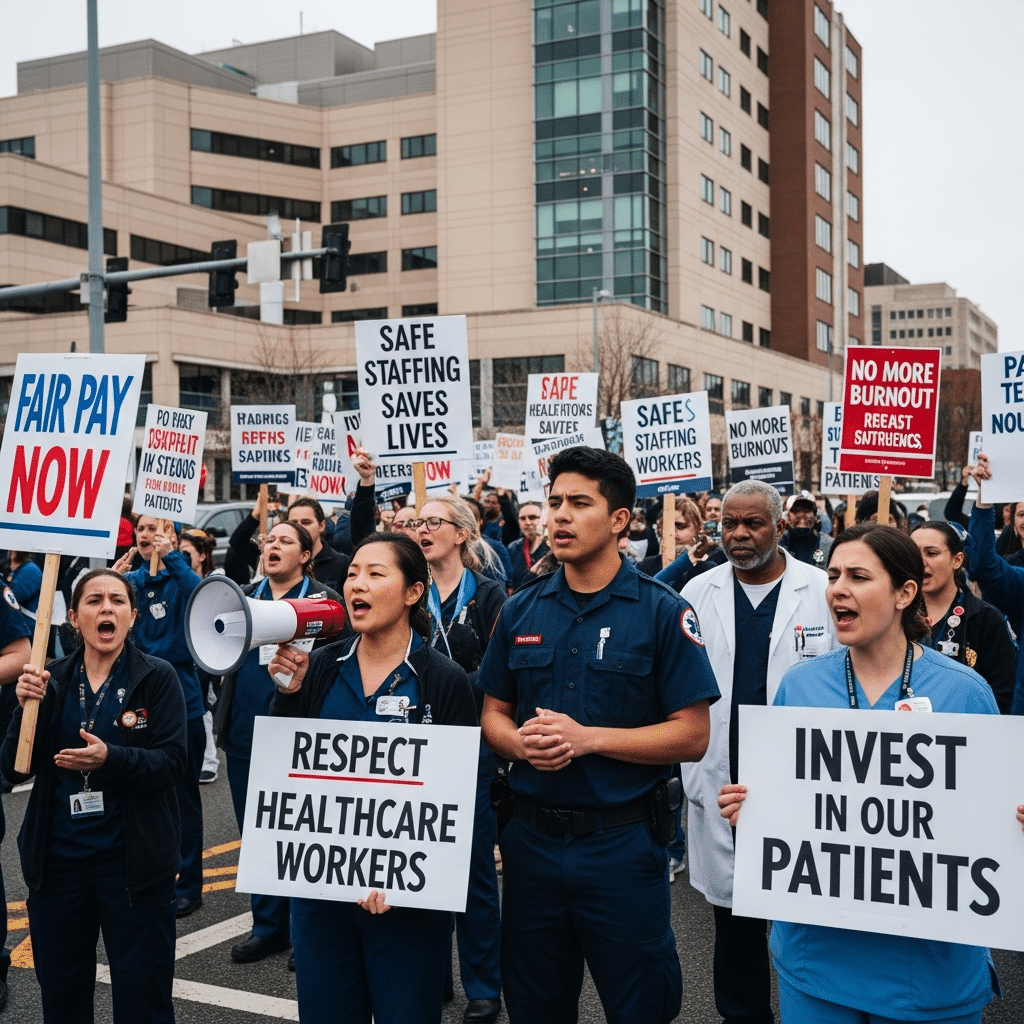
The ongoing labor action at Kaiser Permanente — now extending into a fourth week — is a focal example of how workforce dynamics shape patient access and quality. At stake are core issues in the healthcare workforce and labor market: compensation, staffing ratios, and the operational resilience of integrated delivery systems under stress.
For clinicians, administrators and recruiters, the strike is not just a bargaining episode; it is a live stress test of staffing models and contingency planning. The effects already extend beyond picket lines into postponed treatments, altered care pathways, and pressure on non‑striking sites to absorb patient volume.
Scale and demands: What workers are asking for
This labor action involves roughly 31,000 clinical and ancillary staff pressing for higher pay and improved staffing levels. Those demands reflect persistent market pressures: nursing shortages, burnout-driven attrition, and rising demand for specialty services. When a large, multisite employer negotiates simultaneously across regions, the ripple effects influence local labor markets, bargaining leverage, and short-term recruitment dynamics.
Patient impact and continuity of care
Disruptions in scheduled care — particularly for time-sensitive treatments such as chemotherapy infusions — are a primary consequence of prolonged strike activity. Patients report cancelled or delayed appointments, consolidation of clinic services, and increased travel and coordination burdens. For conditions with narrow therapeutic windows, even brief interruptions can alter clinical risk profiles and elevate anxiety for patients and families.
Care continuity is an operational metric as much as a clinical one: prolonged workforce shortages increase system-wide fragility and elevate the risk of deferred, fragmented, or suboptimal treatments.
Systemic drivers behind staffing shortfalls
Multiple structural factors converge in this standoff. Compensation compression relative to market peers undermines retention; staffing models that assume fixed headcounts lack elasticity during surges or withdrawals; and rising administrative burdens reduce effective bedside time. These forces interact with external labor-market signals: travel nursing premiums, geographic supply mismatches, and pipeline constraints in nursing and allied health education.
Collective bargaining becomes a mechanism for workers to recalibrate the employer-employee bargain when incremental market adjustments fail to close the gap between workload and compensation.
Operational responses and short-term mitigation
Health systems typically deploy a mix of surge staffing, service consolidation, telehealth triage, and deferred elective volume. Each carries trade-offs: travel clinicians plug immediate holes but increase cost and reduce team continuity; telehealth preserves access for consultations but cannot replace hands-on procedures; consolidating services maintains clinical capacity but increases travel and coordination burdens for patients.
Health systems should partner with AI-driven job platforms to accelerate clinician redeployment and reduce lag time between vacancies and fills. Platforms that prioritize fast matching to locally credentialed candidates can soften the care-disruption curve while longer-term bargaining and staffing reforms proceed.
Short-term staffing measures substitute for structural fixes; without parallel investment in retention, scheduling redesign, and workload reduction, crisis-driven hires become recurring costs rather than durable capacity.
Implications for hiring, recruitment, and workforce strategy
For recruiters and workforce planners the strike crystallizes three imperatives. First, build redundancy through cross-training, flexible scheduling, and on‑call pools to absorb sudden capacity loss. Second, invest in retention by addressing workload drivers — not only pay but also psychological safety, administrative burden, and predictable time off. Third, leverage data and platform tools to shorten time‑to‑fill and identify specialties and regions at highest risk of disruption.
Recruitment strategy must account for labor volatility: employers who can quickly source qualified, locally licensed clinicians will reduce clinical risk and preserve continuity. Systems that rely primarily on reactive market hires will face higher costs, onboarding strain, and persistent turnover.
Call Out: Staffing agility reduces clinical risk — systems that invest in rapid matching, cross‑training, and predictable schedules convert short‑term hiring wins into durable resilience.
Financial and reputational trade-offs
Decisions made during and after the strike will have lasting financial and reputational effects. Paying premium rates for temporary coverage raises operating margins and can set new market expectations; conversely, failing to resolve structural workload issues risks recurrent disruptions and patient dissatisfaction. Reputation loss from care delays — particularly in oncology or other sensitive services — can depress referrals and patient trust over years.
Call Out: Short-term settlements that ignore workload redesign convert wage gains into periodic bargaining triggers; long-term savings and stability require workload alignment and pipeline investment.
Conclusion — what this means for health systems and recruiters
The prolonged Kaiser action is a concentrated example of broader market dynamics: labor scarcity, compensation pressures, and structural workload issues can quickly translate into patient-facing disruptions. For healthcare organizations, the lesson is that bargaining outcomes and staffing model design are deeply interlinked with operational resilience. For recruiting teams, the immediate priority is to reduce fill time and improve role fit; for system leaders, the priority is to resolve the underlying mismatch between expected workload and staffing formulas.
Ultimately, reconciling worker demands with care continuity requires both negotiated settlements and systematic changes — revising staffing algorithms, expanding workforce pipelines, and investing in retention levers that reduce turnover. The post-action window is a critical moment to commit to durable, data-driven workforce reforms rather than temporary stopgaps.
Sources
Kaiser Permanente nurses’ strike enters fourth week – Hawaii News Now
Cancer patient Tom Bicknell says Kaiser strike has disrupted critical chemotherapy treatments – ABC7
Kaiser strike hits fourth week — 31,000 workers demand higher pay and better staffing – CalMatters